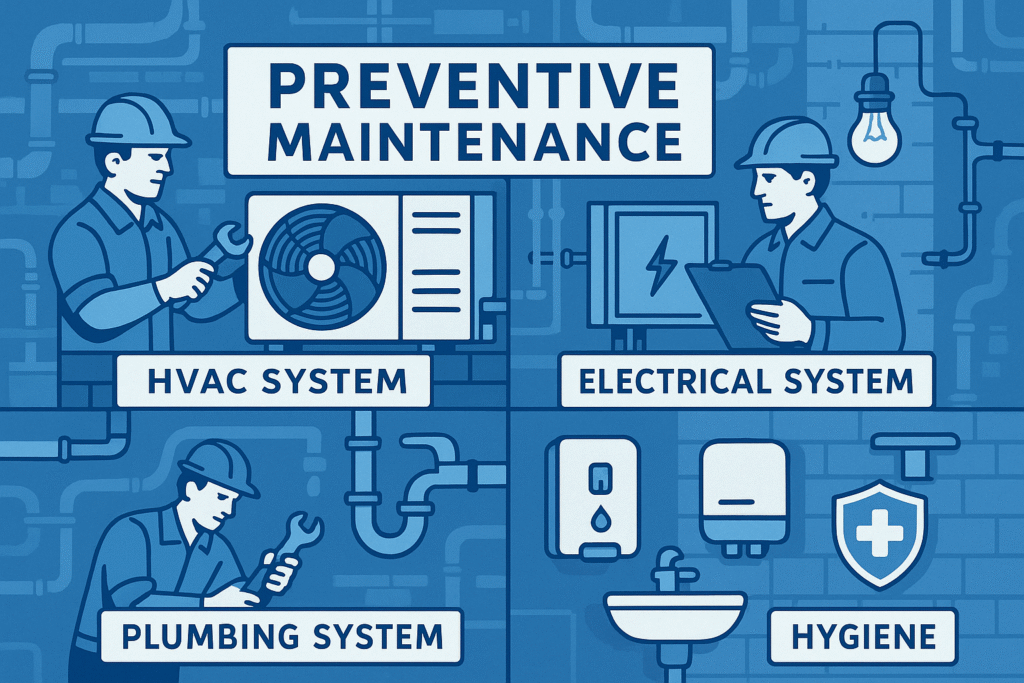
In every building — whether it’s a corporate office, a hospital, or a commercial complex — assets such as HVAC systems, plumbing, electrical networks, and even hygiene infrastructure work quietly behind the scenes. When they fail, everything stops.
The reality is simple: reactive maintenance costs more than prevention. Waiting for a system to break before fixing it leads to unplanned downtime, higher energy use, and unnecessary repair costs. Preventive maintenance, on the other hand, safeguards not only your equipment but also your organization’s reputation, safety, and long-term profitability.
Preventive maintenance is not just about scheduling routine inspections — it’s about protecting the value and performance of assets before problems arise.
The goal is to:
Detect early signs of wear, leaks, or inefficiency.
Extend equipment lifespan through timely servicing.
Maintain consistent environmental comfort and hygiene standards.
Avoid safety incidents caused by system failures.
Think of it as insurance for your facility — an upfront investment that prevents costly disruptions later.
Heating, Ventilation, and Air Conditioning (HVAC) systems are among the most critical and energy-intensive assets in any facility. Neglecting their maintenance can have multiple consequences:
Reduced Efficiency: Clogged filters, dirty coils, or leaking ducts force systems to work harder, increasing energy consumption by up to 30%.
Poor Air Quality: Dust, mold, or unfiltered air directly affects occupant health and productivity.
Unexpected Failures: A malfunctioning compressor or chiller unit can halt operations entirely, leading to expensive emergency repairs.
Regular inspection, cleaning, and calibration of HVAC systems ensure optimal performance, lower power usage, and a healthier indoor environment — all of which directly protect your operational bottom line.
Plumbing and electrical networks are often ignored until something breaks. But even minor faults can escalate rapidly:
A small leak can lead to structural damage or mold growth.
Poor wiring or overloaded circuits can cause fire hazards.
Inconsistent voltage can shorten the life of sensitive equipment.
Preventive maintenance identifies these risks early — checking for pressure balance, corrosion, insulation wear, and system load. By addressing them proactively, organizations avoid costly damage and maintain compliance with safety standards.
Preventive maintenance extends beyond machinery — it includes hygiene systems such as washrooms, pest control, and waste management.
For example:
Regular servicing of sanitary dispensers and air purifiers maintains health standards and improves user experience.
Scheduled pest control prevents infestations that could damage property or create health violations.
Routine inspection of drainage and waste systems prevents blockages and unpleasant odors that harm reputation.
In sectors like healthcare, hospitality, and government facilities, hygiene maintenance directly influences trust and regulatory compliance.
A preventive approach creates measurable financial advantages:
Up to 40% reduction in reactive maintenance costs
20–30% improvement in asset lifespan
Lower downtime and productivity losses
Better energy efficiency and lower utility bills
Over time, the savings generated by planned maintenance far exceed the cost of routine servicing. The result is a facility that operates smoothly, safely, and predictably — with fewer crises and budget shocks.
Technology is redefining preventive maintenance through smart monitoring and analytics.
IoT sensors continuously track temperature, vibration, and energy use.
AI-powered software predicts when a system will fail and schedules maintenance automatically.
Digital dashboards give facility managers real-time visibility over multiple sites.
This evolution — often called predictive maintenance — transforms facilities from reactive operations into intelligent, self-optimizing ecosystems.
Preventive maintenance is not a one-time action; it’s a culture. It requires collaboration between management, technicians, and service partners — all committed to reliability and quality.
Organizations that adopt this mindset gain a competitive advantage: they maintain safer workplaces, protect valuable assets, and ensure that their buildings perform at their best every day.
From HVAC systems to hygiene services, preventive maintenance is the foundation of operational excellence. It protects assets, reduces costs, enhances comfort, and upholds safety standards.
In a world where every minute of downtime and every wasted kilowatt matters, prevention isn’t just maintenance — it’s strategy.
Elevating Facility Management. Delivering Excellence.

© 2025
This website uses cookies to provide you with the best browsing experience.